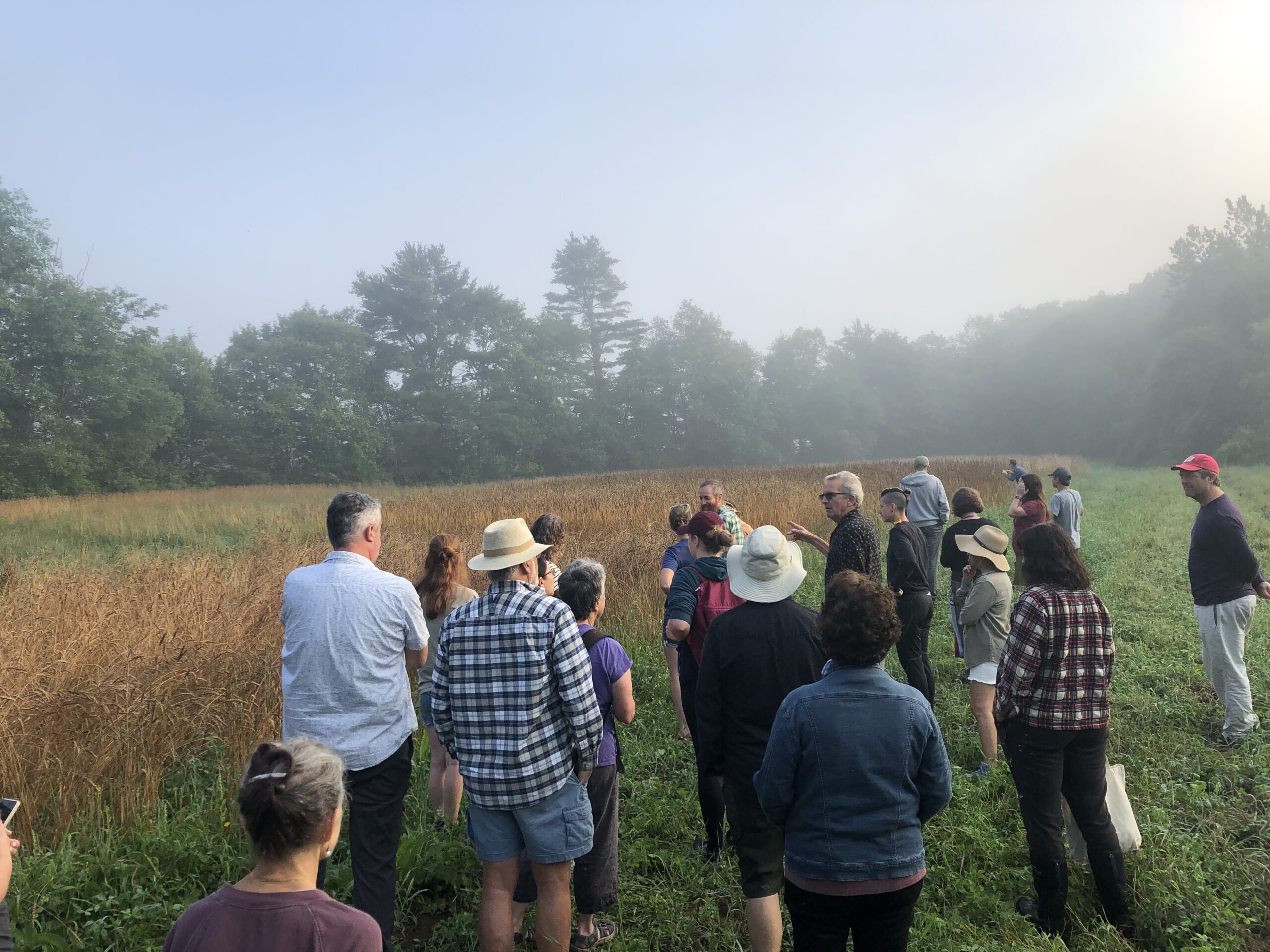
The first ever Organic Grain and Seed Summit took place Kennebec Valley Community College-Alfond Campus, Maine Grains, and The Miller’s Table Cafe. Farmers gather from across New England to learn about organic grain growing and to connect with one another.

In April 2025, farmers from across New England gathered with the Maine Grain Alliance in Skowhegan and Hinckley, Maine, for a summit celebrating the future of organic grains. Through inspiring keynotes, hands-on workshops, and meaningful conversations shared over local meals, participants connected with farmers, seed savers, researchers, and grain leaders—each contributing to a resilient grain economy grounded in heritage, sustainability, and innovation.
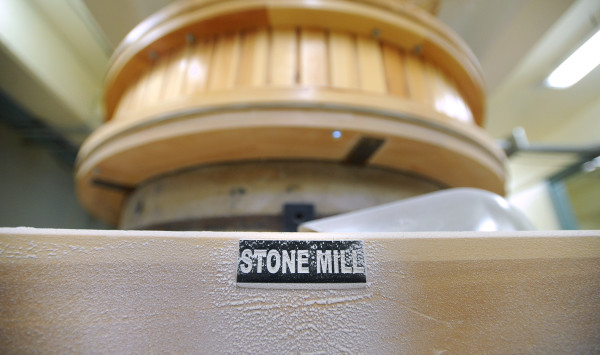
Farmers were welcomed to Maine Grains for a tour the Somerset Grist Mill in Skowhegan, Maine. Attendees learned how a Victorian jailhouse was transformed into important processing facilty of grains and a hub of innovation.
4:00 PM to 5:00 PM
We kicked off the conference with a warm welcome supper at The Miller’s Table at Maine Grains. Farmers enjoyed a delicious meal showcasing local grains, connecting with fellow attendees, and diving into engaging conversations with farmers, seed savers, and grain experts. It was the perfect way to start the conference.
5:00 PM to 7:00 PM
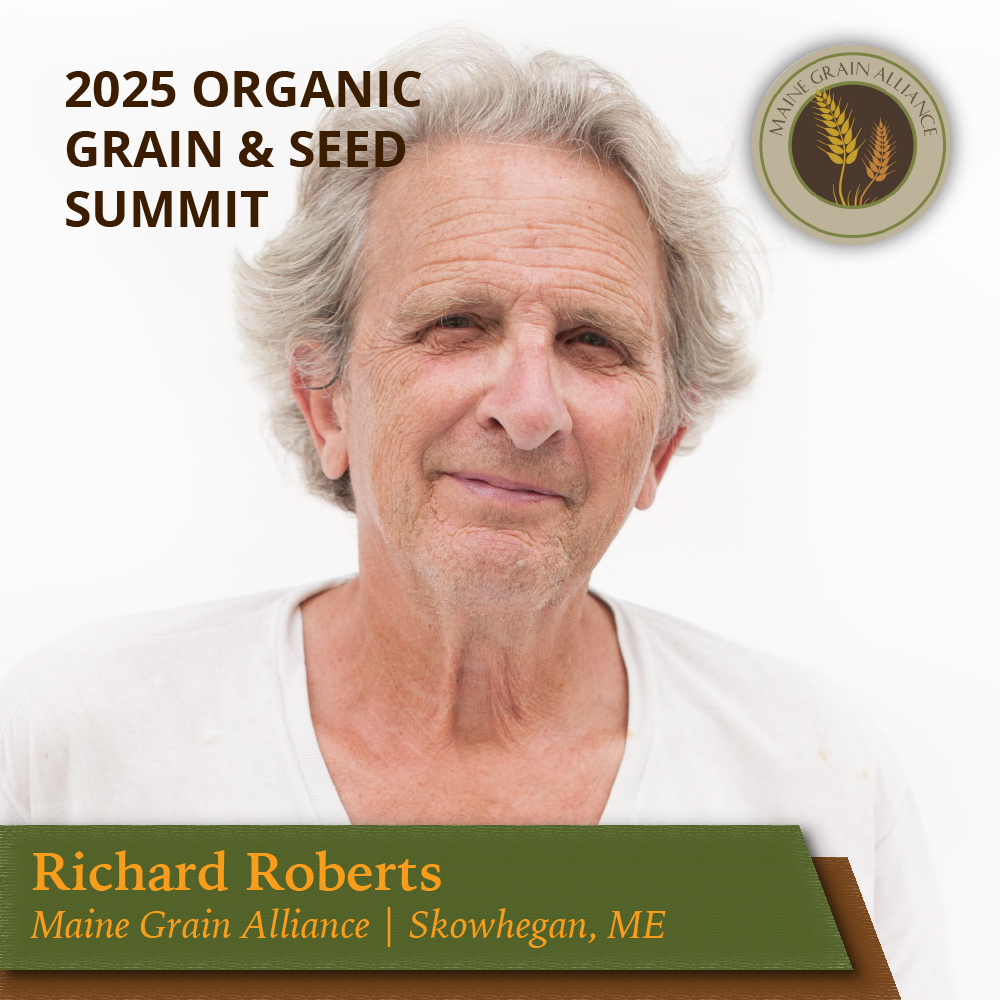
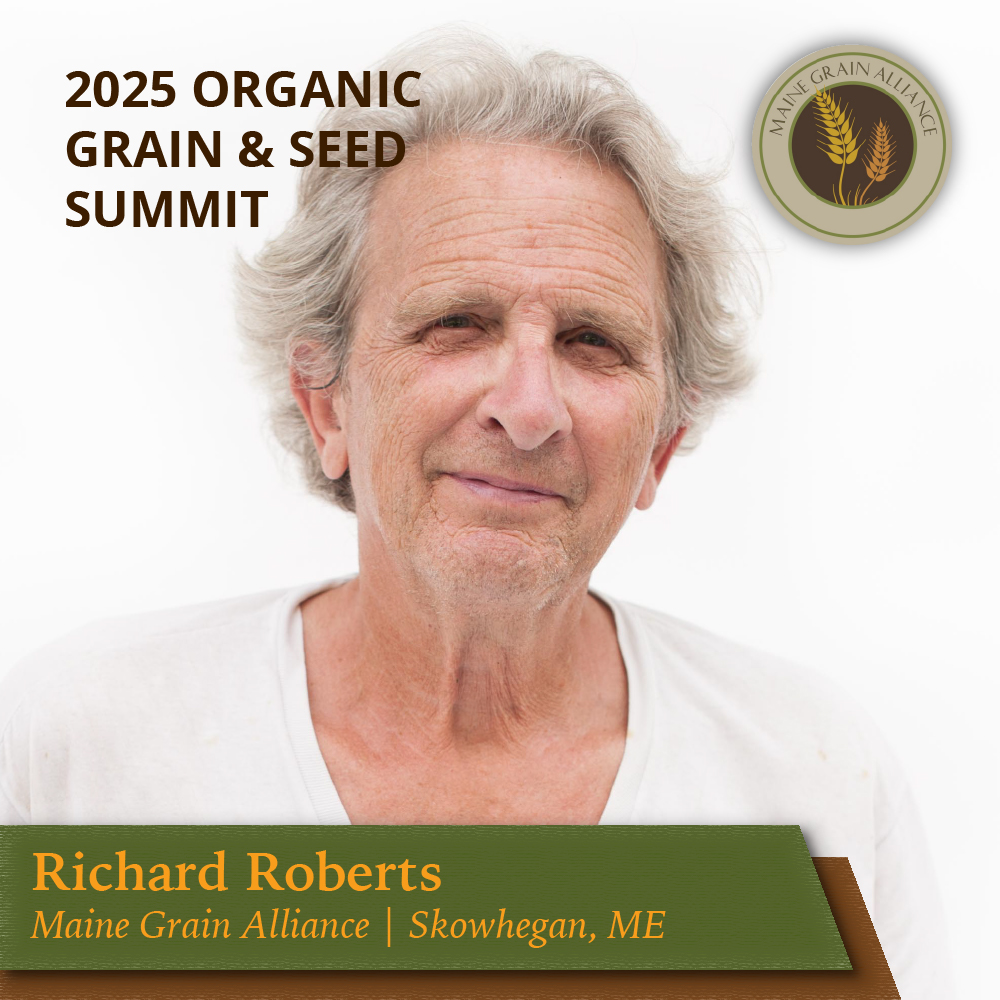
As a gardener, mechanic/fabricator, tinkerer, and high school teacher, Richard became intrigued with the idea of a gristmill in Skowhegan and became a part time employee of Maine Grains. After working with the original farmers of MGA’s Heritage Seed Restoration Project, he now leads that program and continues to research and grow heritage varieties of cereal grains that are adapted to Maine’s climate.
9:00 AM to 9:50 AM
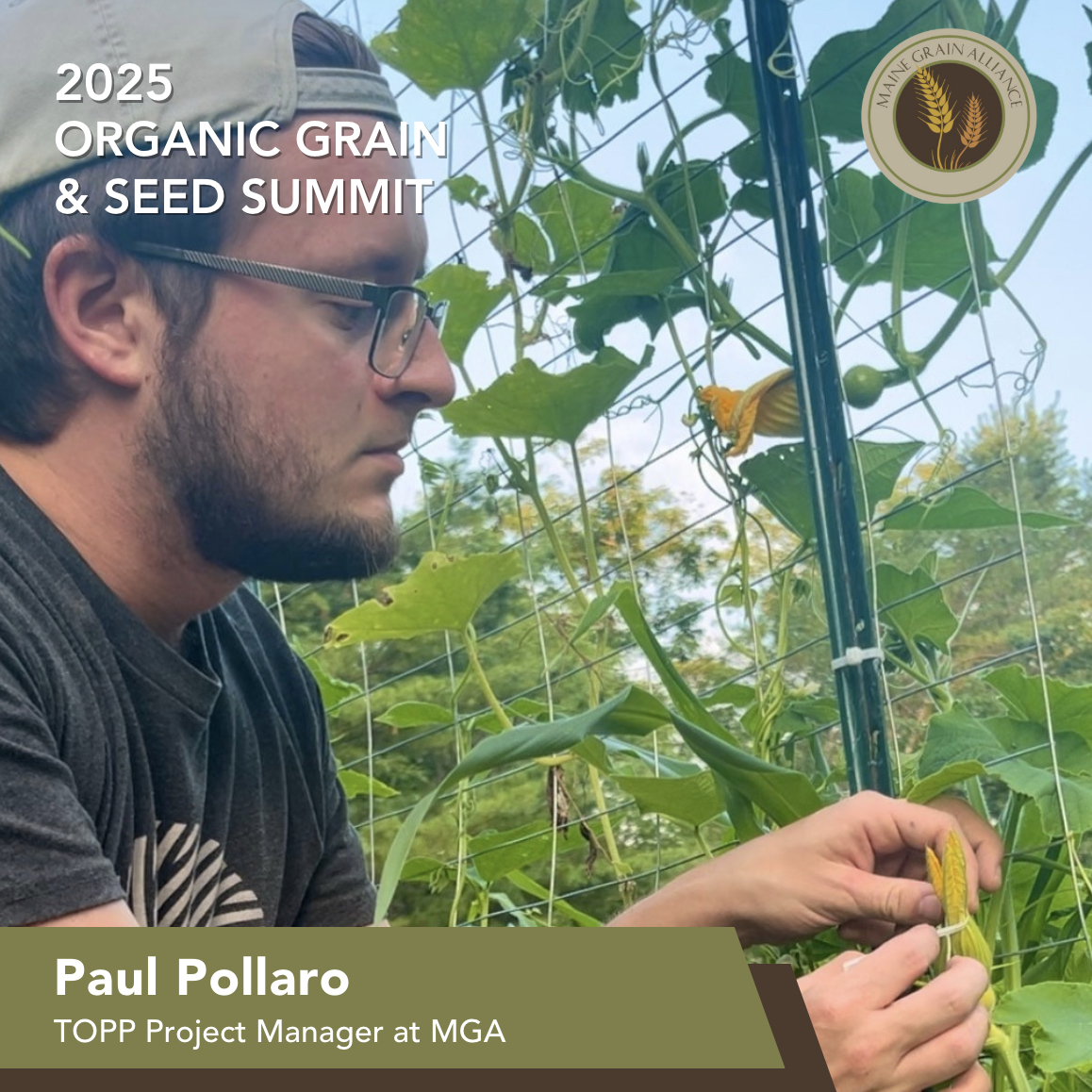
The earliest Old World explorers to ever step foot in New England all made reference to the diversity of flint corn, dry beans, and sunflowers being grown here by the native people. These crops not only shaped the future of American agriculture and foodways, but also the world. Yet, despite the very practical value they offer to modern growers, many of our region’s heritage varieties are being forgotten. Join MGA’s TOPP Project Manager, Paul Pollaro, to discuss how organic farmers can use these varieties to their advantage and take a peek behind the curtain into the day-to-day work of a heritage seed restorationist.
10:00 AM to 10:50 AM
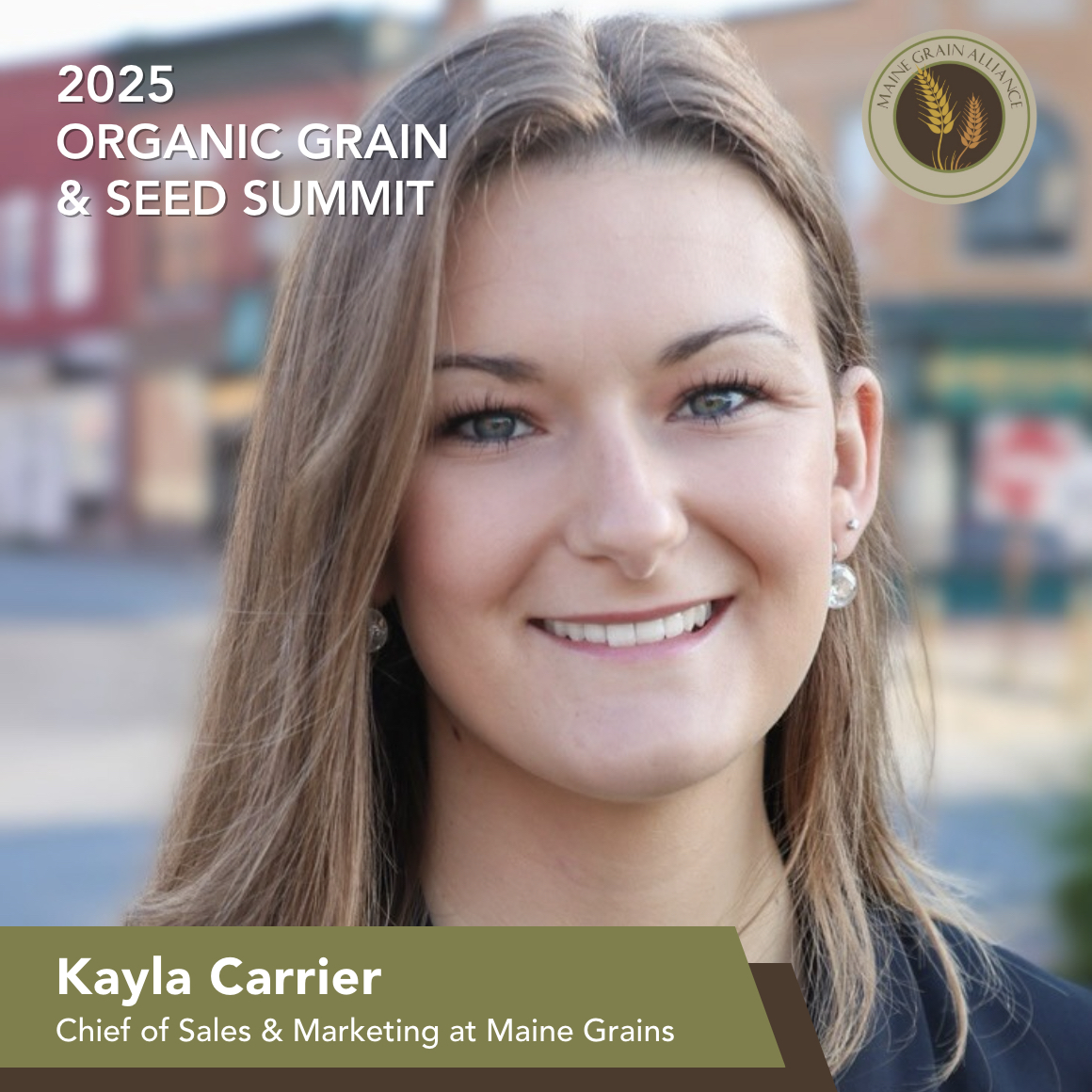
The growth of Maine’s grain economy over the past decade has opened up many new opportunities for growers, but the daily challenges involved in producing a healthy grain crop can make it difficult to keep up with ever-changing market demands. Join Maine Grains’ Chief of Sales & Marketing, Kayla Carrier, to overview what today’s consumers are looking for most (and what may be soon to come).
11:00 AM to 11:50 AM
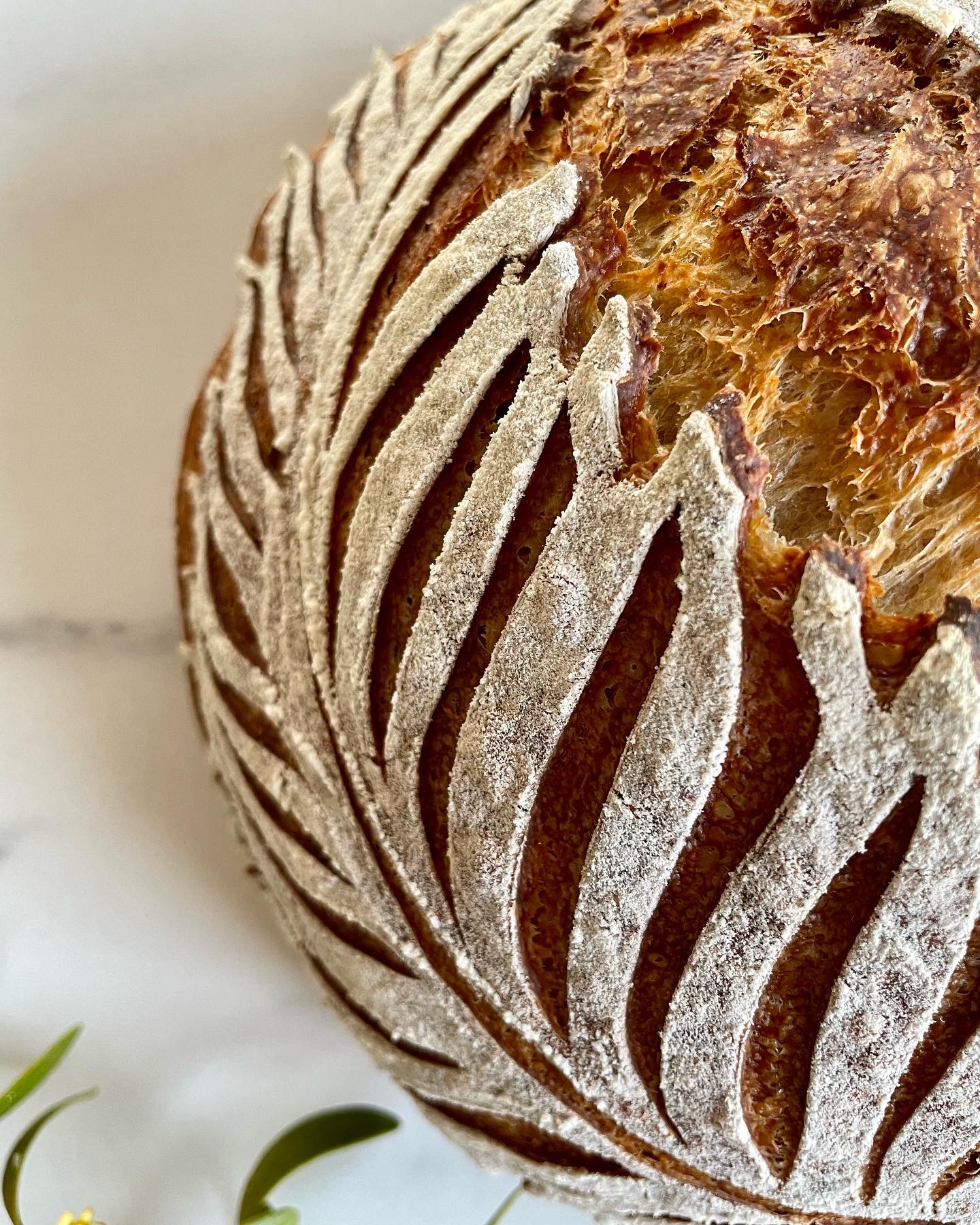
We gathered for a mid-day session that blends learning, networking, and nourishment. The Heritage Grain Exchange offers space for farmers, seed savers, and grain enthusiasts to share seeds, stories, ideas, and resources in an informal setting. Enjoy a thoughtfully prepared lunch by The Miller’s Table Café, featuring a delicious menu centered on local grains that showcase the flavors and versatility of Maine’s grain economy.
12:00 PM to 1:20 PM
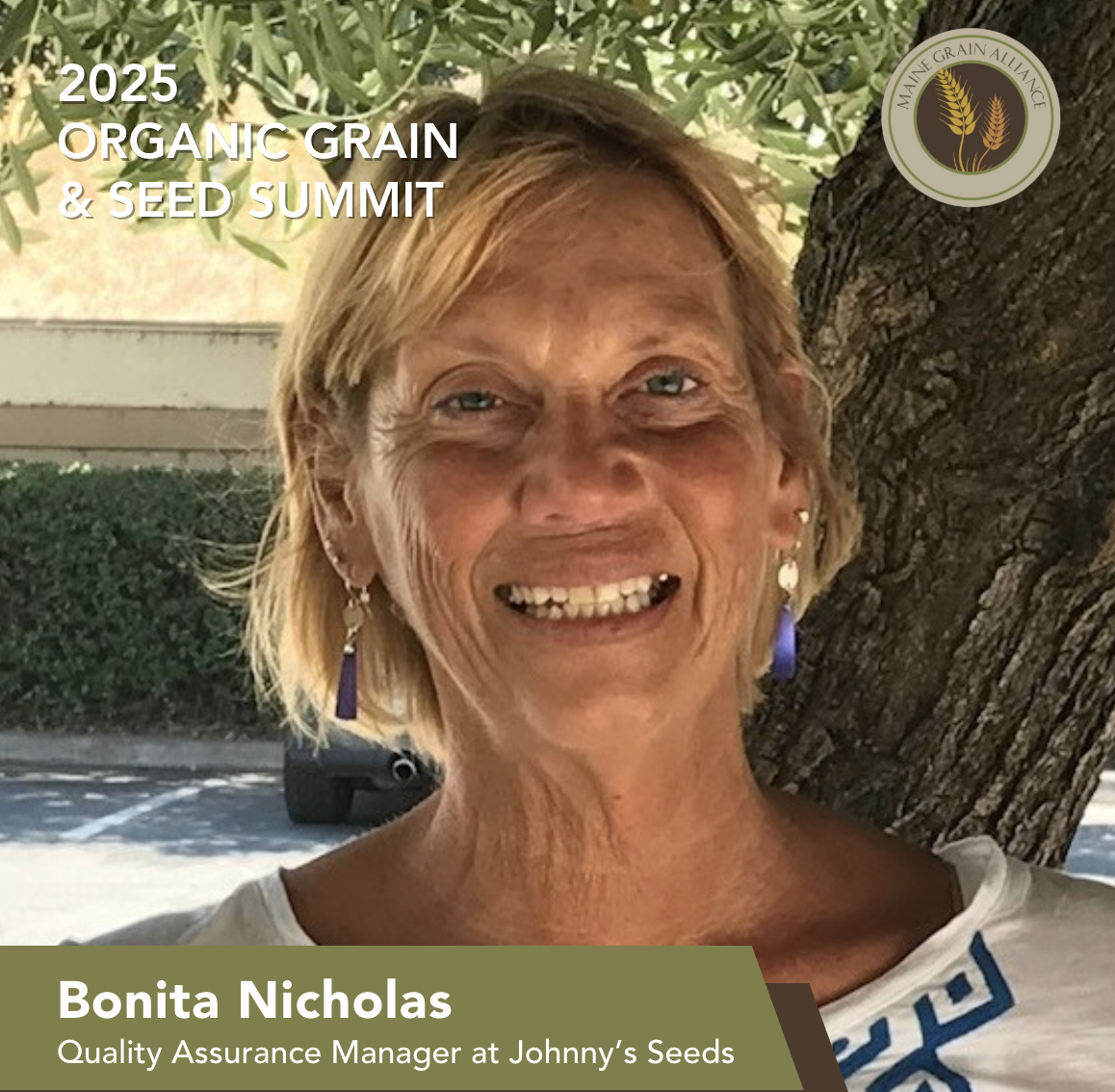
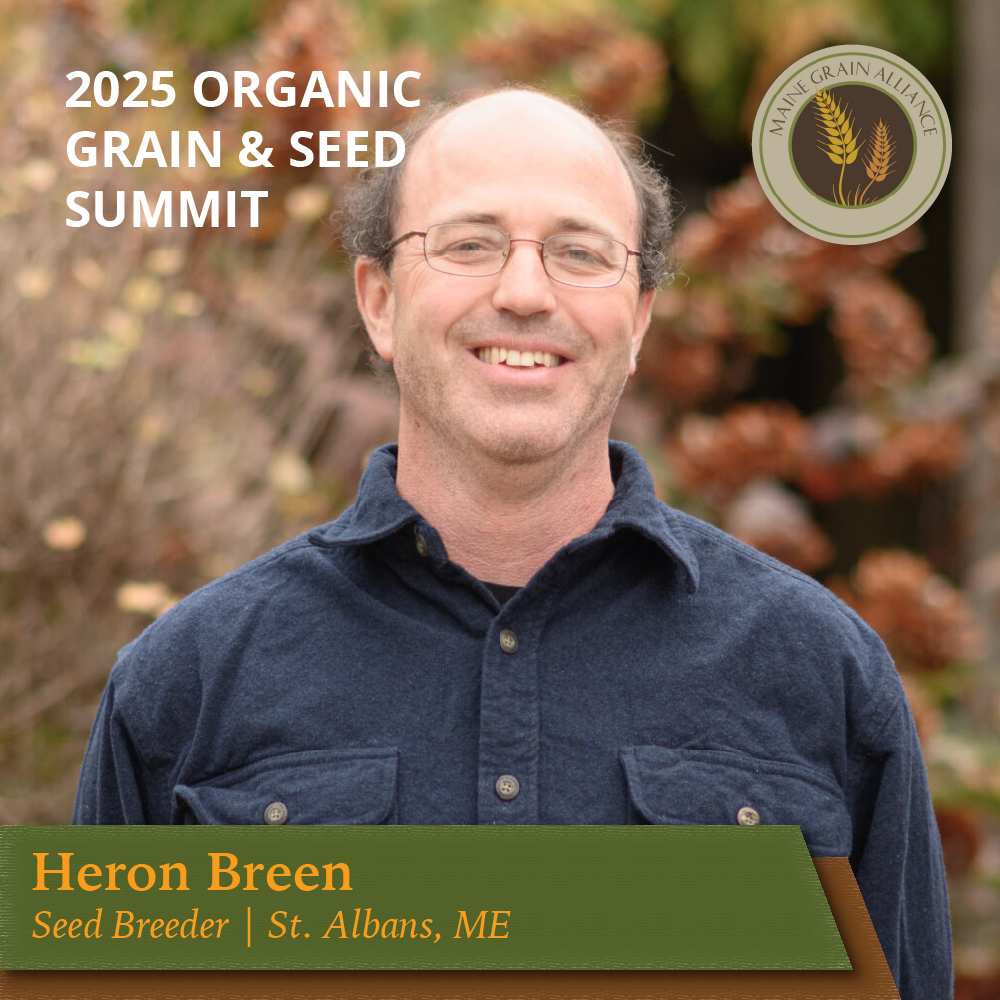
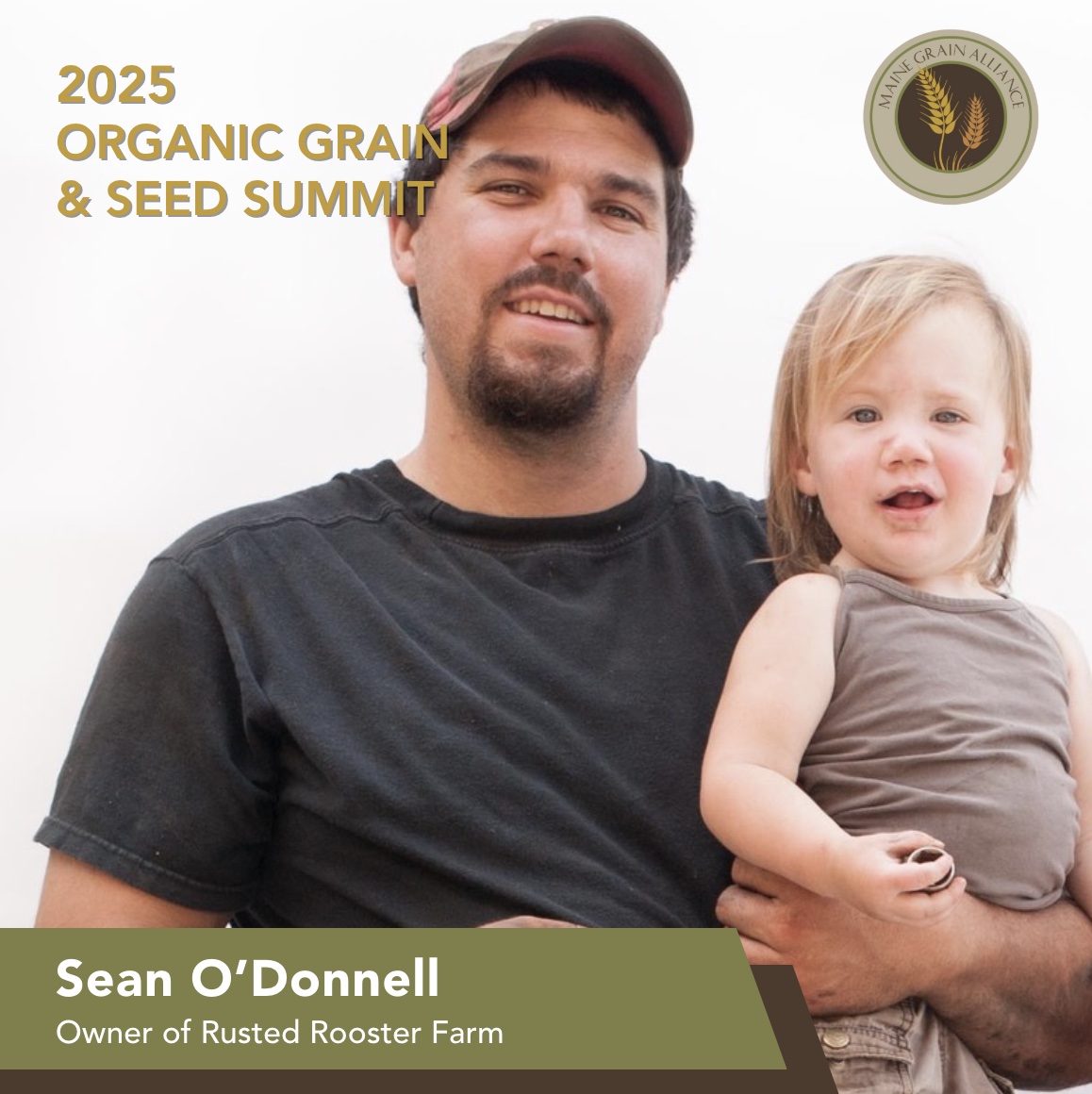
Moderator: Bonita Nicolas. Panelists: Heron Breen, Richard Roberts, & Sean O’Donnell
Growing grains for seed can greatly increase the value of your crop but introduces a new set of standards and practices for farmers. While familiar concerns like falling numbers and protein content no longer hold the power to make or break a growing season, considerations like disease management, seed sanitation, and proper licensing/labeling take on a much greater importance. In this workshop, Bonita Nicolas, Heron Breen, Richard Roberts, and Sean O’Donnell will discuss the basic tools and information for farmers to know when growing organic grains for seed production.
1:30 PM to 2:20 PM
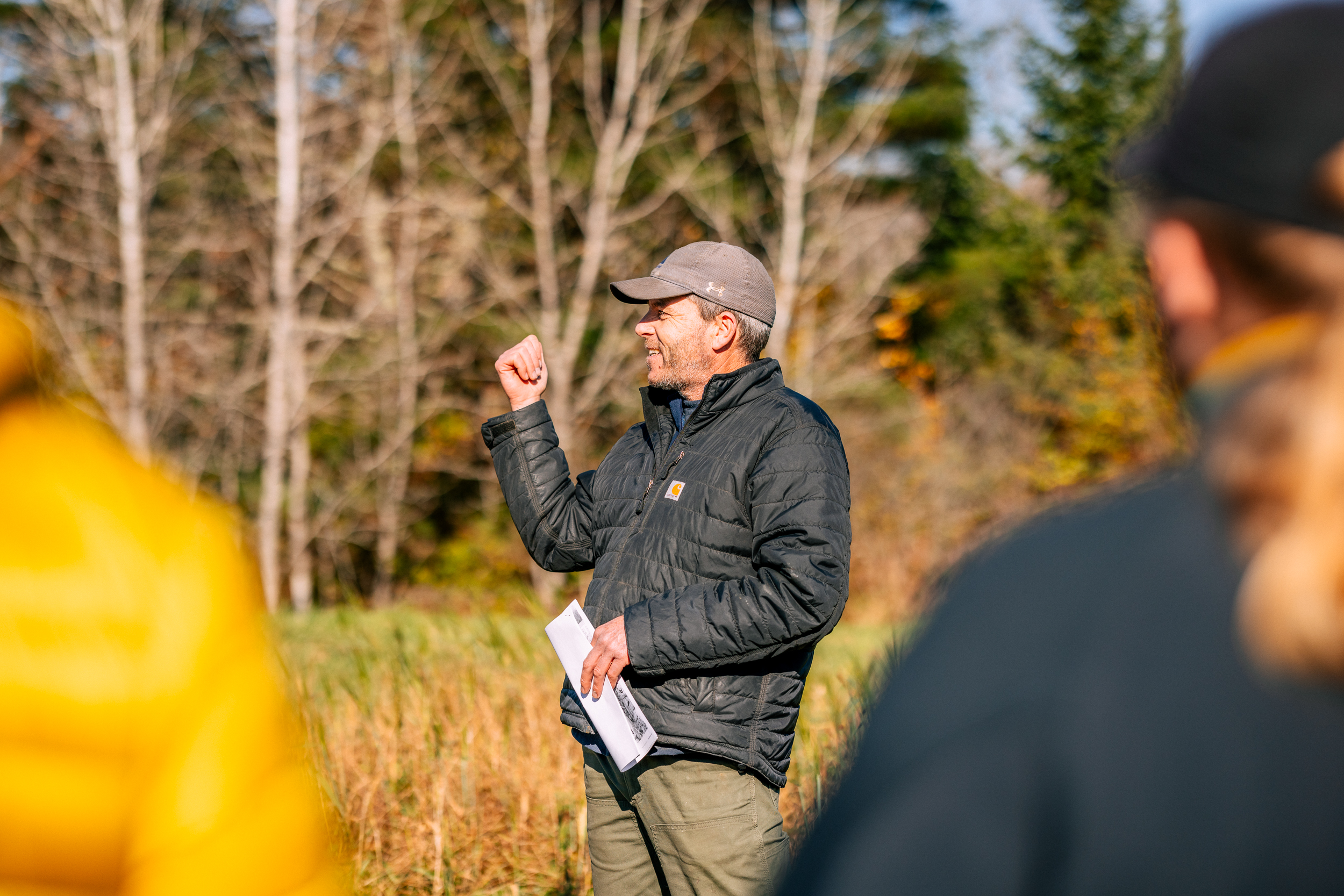
Join Tom Molloy, Sustainable Agriculture Research Associate at UMaine, for a discussion on the most problematic weeds impacting grain crops in Maine and the most effective, research-backed strategies to manage them using organic practices.
2:30 PM to 3:20 PM
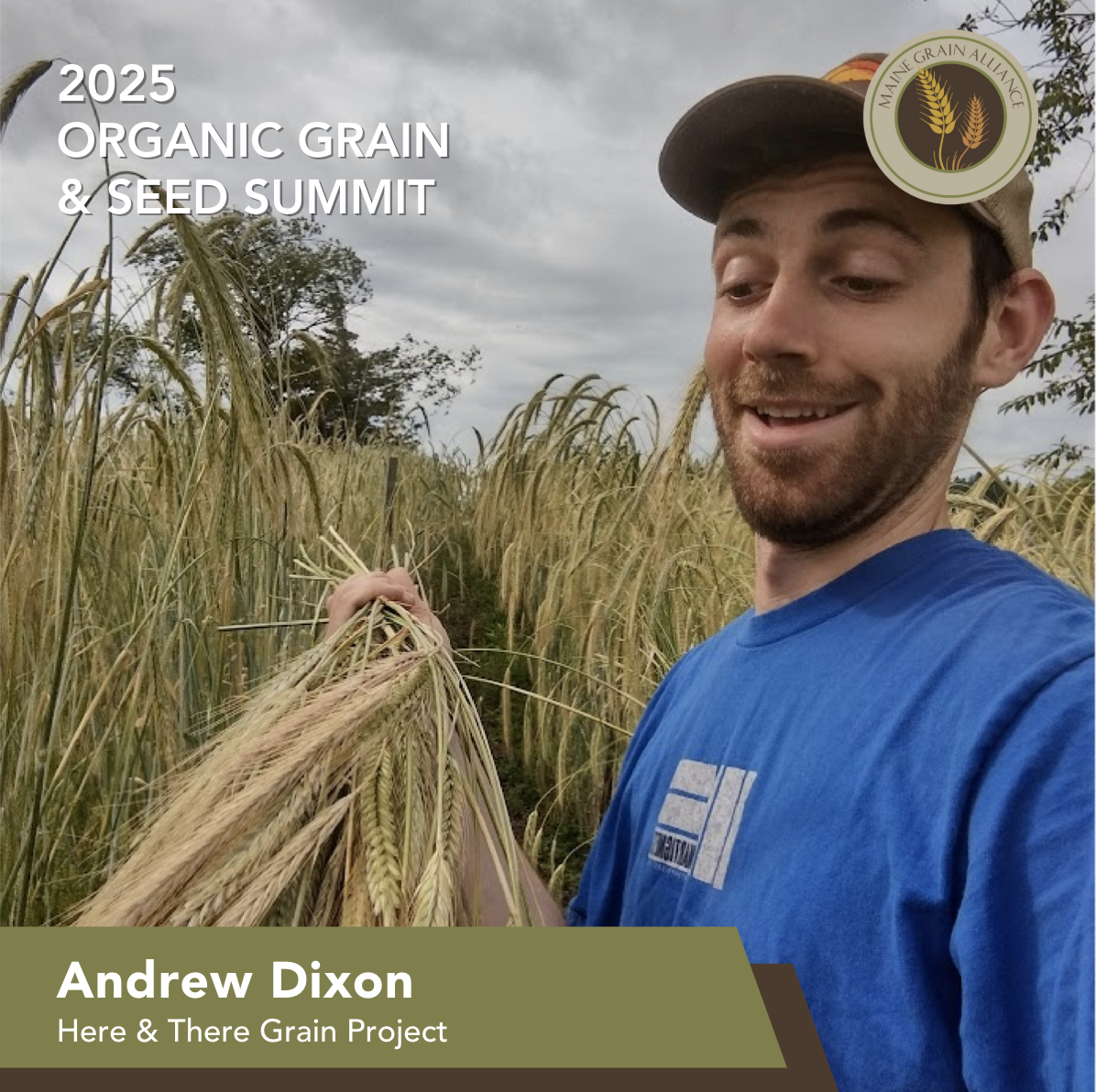
Starting with 50 seeds, how long will it take to reach small-scale food-grade grain production? What even is small-scale as it relates to growing cereal grains? Sowing, harvesting, drying, and storing — each scale up looks a little different. This talk will explore some of the challenges and opportunities unique to small-scale grain growers. Andrew will overview the types of equipment that you can get by with (and some that you’ll wish you had) and share his story of growing a handful of seeds up to a few acres.
3:30 PM to 4:20 PM
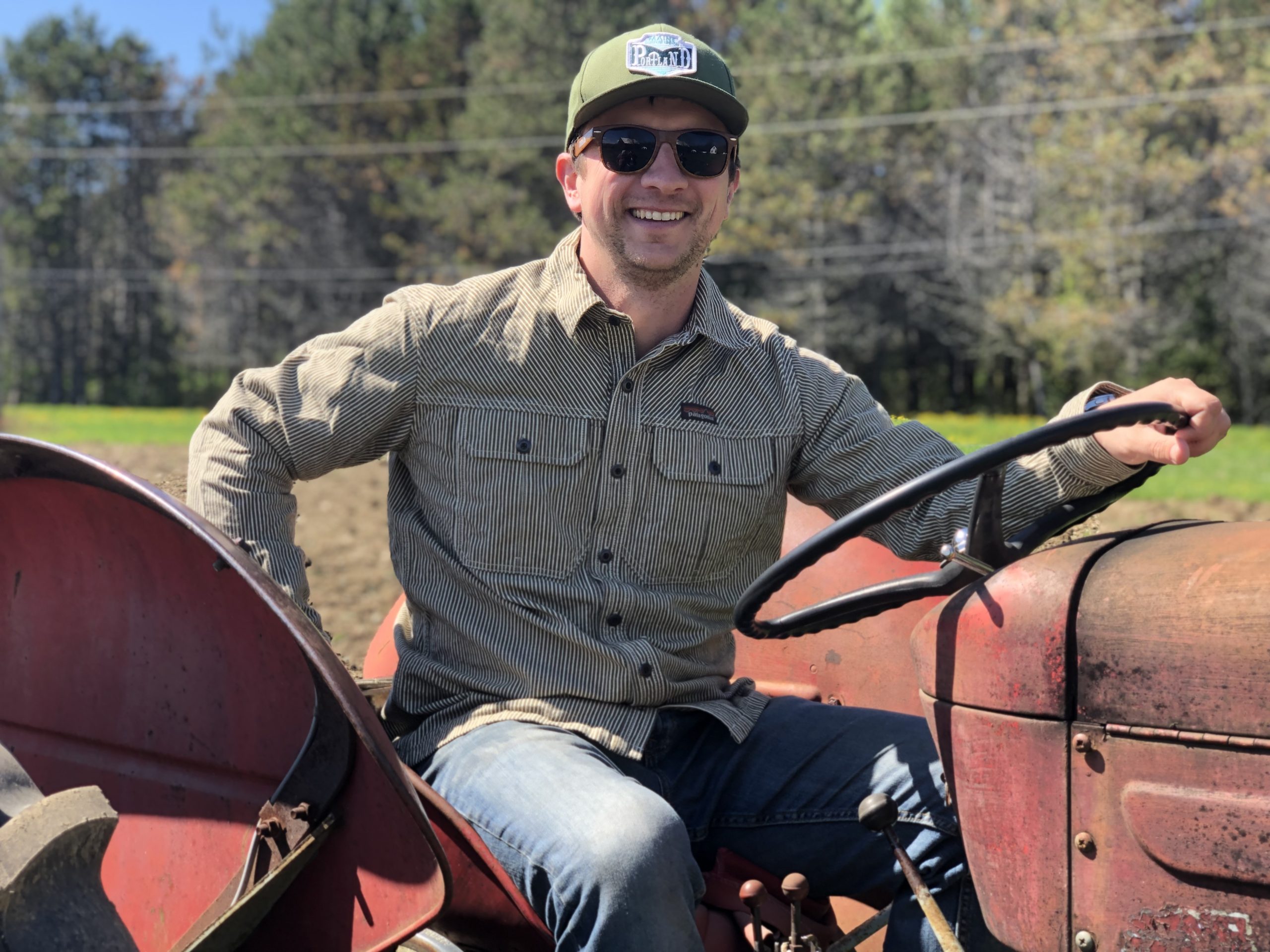
To conclude the day, Tristan Noyes, Executive Director of the Maine Grain Alliance, will offer closing remarks reflecting on the insights shared, the connections made, and the path ahead for strengthening our regional grain community.
5:00 PM to 5:15 PM
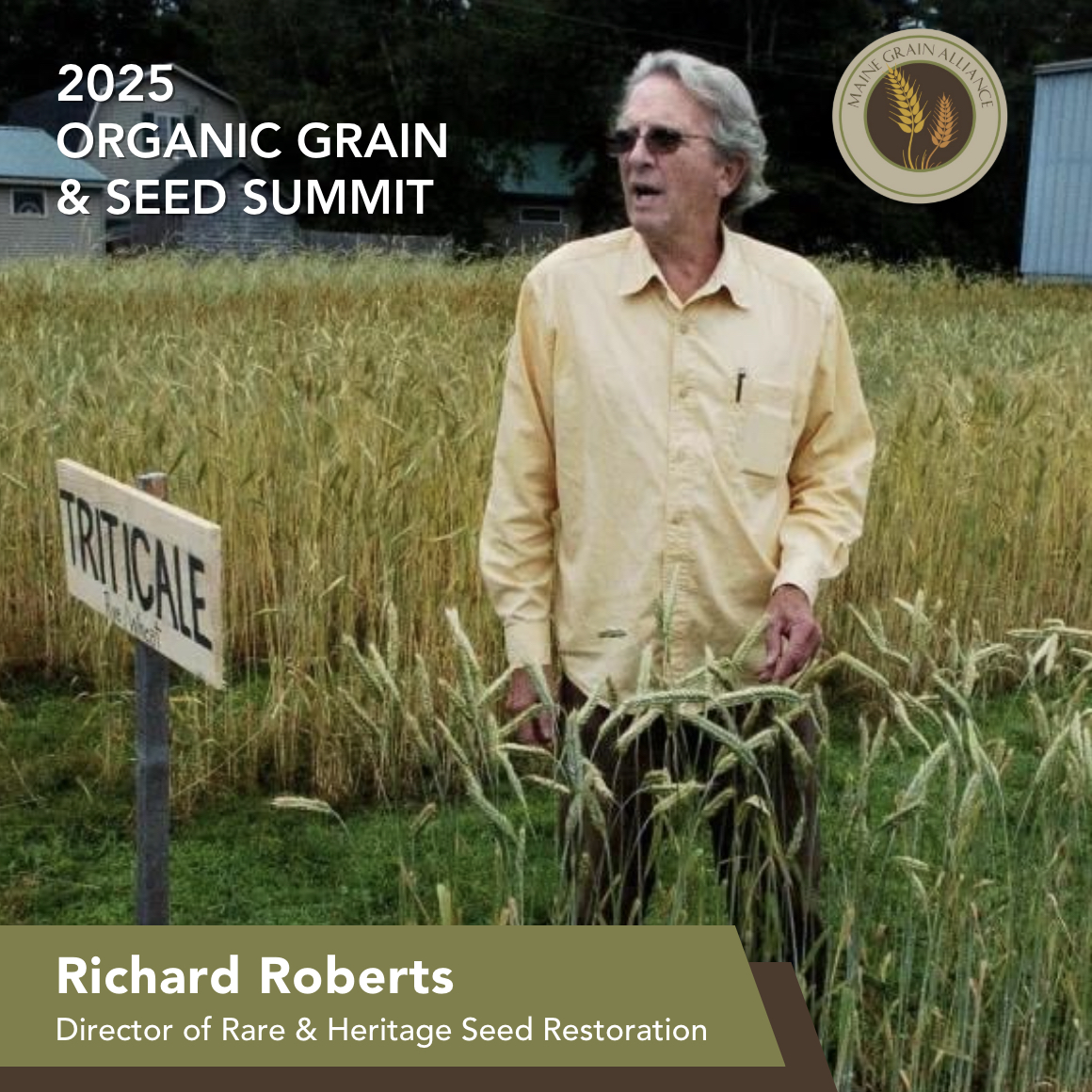
As a gardener, mechanic/fabricator, tinkerer, and high school teacher, Richard became intrigued with the idea of a gristmill in Skowhegan and became a part time employee of Maine Grains. After working with the original farmers of MGA’s Heritage Seed Restoration Project, he now leads that program and continues to research and grow heritage varieties of cereal grains that are adapted to Maine’s climate.
Kayla Carrier earned her B.A. in Sport Management Marketing from Thomas College in 2019. After college, she worked as an event coordinator for Alliance Integrated Marketing Services leading grassroots marketing campaigns. After being introduced to Amber Lambke, Kayla joined Maine Grains in March 2021, where she now channels her enthusiasm for community and healthy living as Chief of Sales & Marketing in addition to serving as a board member for both the Maine Grain Alliance and the Skowhegan Region Chamber of Commerce.
Paul Pollaro is both a member of the Maine Grains sales team and the TOPP Project Manager at the Maine Grain Alliance, organizing educational events for grain growers and assisting Richard Roberts on MGA’s Heritage Seed Restoration Project. In addition to these roles, Paul works as an independent seed grower, preserving a wide range of historic and endangered food crops for the Heritage Harvest Project.
After earning a Masters degree in Agricultural Economics and serving in the Peace Corps as an Agricultural Extension Agent, Bonita Nicholas joined Johnny’s Selected Seeds in 2009, overseeing their seed testing lab. In 2020, she became the Seed Production Manager at the Johnny’s Research Farm in Albion, which quickly became her passion. Bonita now manages seed productions locally, domestically, and world-wide for hybrid and OP vegetable and flower seed crops, both certified organic and conventionally produced.
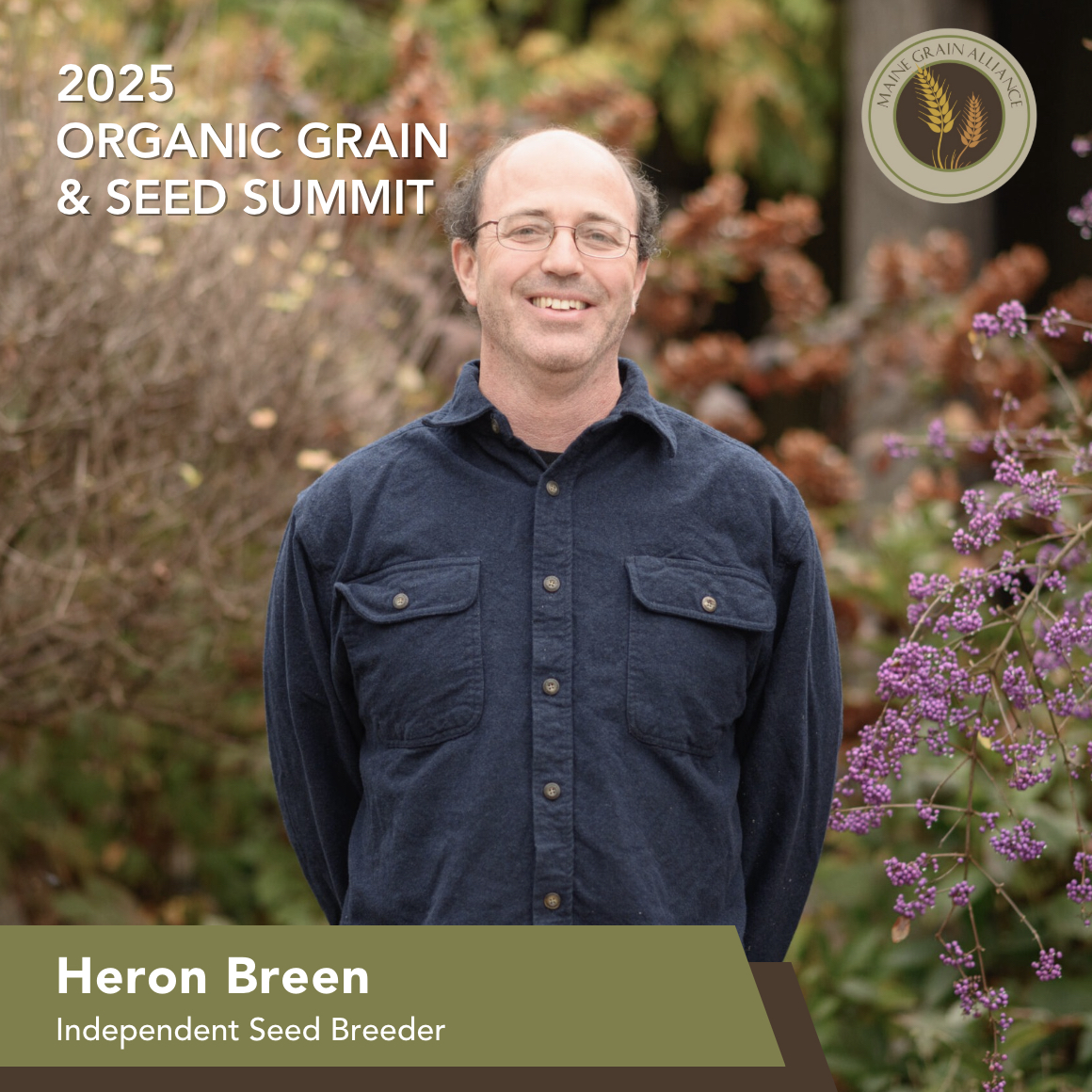
Following a 20+ year career at Fedco Seeds, Heron Breen is now an independent plant breeder and seed saver based out of Saint Albans, Maine with a primary focus on vegetable crops. As co-founder of NOFA-NY’s Northeast Organic Seed Conference, Heron has played a firsthand role in the revival of organic growing practices in the Northeast.
Following in the footsteps of his grandfather, Sean O’Donnell of Rusted Rooster Farm began his career as a Maine farmer at a very young age. Sean began wholesaling root vegetables at the age of 14, selling more than 5,000 lbs of carrots each year. Today, Sean and his family primarily produce non-perishable foods including grass fed beef, cereal grains, dry beans, and sunflowers on their farm in Parkman, Maine.
Tom Molloy is a Research Associate in Sustainable Agriculture for the University of Maine Cooperative Extension and has played an integral role in the resurgence of Maine’s grain industry, aiding grain growers in both the production and marketing challenges of small grains like wheat, barley, rye, oats, and others.
Andrew is the lead crescent wrench at Here and There Grain Project which offers a mobile harvesting service and post-harvest drying and cleaning in southern New Hampshire and coastal Massachusetts. Instead of leasing land, he has partnered with farms to incorporate grain plots into diversified, organic vegetable rotations. Farming part-time since 2021, Andrew has also worked in commercial-scale composting facility construction, at a wood-fired bread bakery, and as a software engineer.
Raised by a farming family in northern Maine, Tristan developed an early passion for supporting agricultural communities. While a student, Tristan’s interest in organic practices led to him co-founding the Bowdoin Organic Garden. After a short spell hiking a section of the Appalachian Trail, he settled in Boston and built a career in global education. Tristan’s love for education took him around the world and ultimately back to Maine, where he and his brother started Gromaine Organic Farm. Tristan soon sought knowledge about growing local grains. Inspired by meeting the incredible members of the Maine Grain Alliance, Tristan joined the organization as its Executive Director in 2016.